
If you are trying to budget a bathroom in Central Connecticut, the honest starting point is a range, not a number. A bathroom that keeps its layout and swaps the fixtures is a different project from one taken back to the studs, and the same 5×8 room can land anywhere from the low five figures to well past $30,000 depending on what is inside the walls and what goes back in.
This guide lays out the published figures for our market, explains what actually moves the number, and covers the things older Connecticut houses tend to add once demolition starts. Myers Home Improvements remodels bathrooms across Bristol, Southington, Farmington, and the surrounding towns, so the examples are from our own jobs.
The short answer: Connecticut bathroom remodel costs by scope
| Scope | What it usually includes | Published range |
|---|---|---|
| Refresh, same layout | New vanity and top, toilet, faucet and shower trim, a new tub or shower surround, flooring, paint, and a fan. Plumbing stays where it is. | $6,000 to $25,000 |
| Full remodel, same layout | Room taken down to the studs. New drywall or cement board, tile or a full-height surround, all new fixtures, flooring, lighting, and ventilation. | $9,000 to $30,000 and up |
| Full remodel with layout changes | Everything above plus moving plumbing, a tub-to-shower conversion, a larger shower, or reworking the room around a new footprint. | Typically above $30,000 |
The first two ranges come from Fixr’s 2026 national cost guide, and they are wide on purpose. The most useful single data point for our area is the 2025 Cost vs. Value Report, which tracks a standard midrange bathroom remodel city by city. For the Hartford market it puts the job at $26,560 and estimates that about 59.8% of that comes back at resale. That project is a 5×7 bathroom with every fixture replaced: a new tub with a tile surround, a new vanity and counter, a new toilet, a ceramic tile floor, and finished walls. It is a good proxy for a full remodel that keeps the existing layout.
Two things are worth noticing. First, the Hartford figure is almost identical to the national midrange number for the same project, so the idea that Connecticut bathrooms cost dramatically more than the rest of the country does not hold up in the data. Second, that figure is an average of quotes for one specific scope. Your bathroom is not that bathroom, which is why the rest of this guide is about the choices and conditions that move the number.
What actually drives the cost
Whether the plumbing moves
Keeping the toilet, sink, and tub or shower where they are is the single biggest cost control in a bathroom remodel. Moving a drain line means opening the floor, and in a house with a finished ceiling below, it means opening that too. It is worth doing when the layout is genuinely wrong for how you live, and plenty of older Central Connecticut bathrooms are worth reworking. Just know that a new footprint is what moves a project from the middle of the table to the bottom row.
Tile or a surround in the wet area
The tub and shower area is where the labor concentrates. A multi-panel surround installs quickly and is easy to keep clean. Tile costs more in both labor and materials, and a tiled shower with a proper waterproofing system, a custom pan, and a glass door is a substantial share of any full remodel budget. Neither is the wrong choice. Our Bristol tub remodel used a full-height surround with built-in shelving and matte black fixtures. The Simsbury rebuild went to a larger walk-in shower with a frameless glass door. Both were full remodels, and the wet-area decision is one of the biggest lines in a budget like that.

Vanity, fixtures, and finish level
A stock vanity, a standard toilet, and mid-priced fixtures keep a refresh in the lower part of its range. A double vanity, a wall-hung unit, a rain head with a handheld, heated floors, or a niche and bench in the shower all add up. Our guides to choosing a vanity and choosing a shower go deeper on those decisions, and bathroom flooring options covers the floor.
What is behind the walls
This is the Connecticut-specific part. A large share of the housing stock in Bristol, New Britain, Torrington, and the older neighborhoods of the surrounding towns predates modern plumbing, venting, and drywall. Once the old tile or surround comes off, it is common to find things that have to be dealt with before anything new goes in:
- Plaster and lath instead of drywall. It does not take a patch well and is usually replaced in the wet area.
- No exhaust fan, or a fan that vents into the attic instead of outdoors. Code calls for mechanical ventilation or an operable window, so a missing fan gets added.
- Water damage in the subfloor or framing from years of a failing caulk line. In Simsbury we opened a shower wall and found termite damage in the framing that had to be rebuilt before the new shower could go in.
- Supply and drain lines at the end of their life, which our plumbing partner replaces while the walls are open rather than after they are closed.
- Ceilings ready to give up. Our Torrington project started with a plaster ceiling that had already come down in sections.

None of that is optional work, and none of it appears in a published average. It is why a written estimate that follows a walkthrough matters more than any figure in this article, and why we suggest holding back a contingency of roughly 10 to 15 percent on a house built before 1970.
Permits
In Connecticut, work involving plumbing, electrical, or mechanical systems needs a permit from your town, and a full bathroom remodel involves all three. Bristol takes applications through its OpenGov portal and sets fees from a published schedule based on the value of the work. The fee itself is a small line in the budget. The real cost of skipping it shows up when you sell and a buyer’s attorney asks about unpermitted work. Ask any contractor you are considering who is pulling the permit. The answer should be them.
Small bathroom vs. primary bathroom
Size matters less than people expect, because the fixtures and the labor to install them cost about the same whether the room is 5×7 or 8×10. Fixr’s 2026 figures by room type run from $1,200 to $15,000 for a half bath, $3,500 to $20,000 for a guest bath, and $7,000 to $30,000 for a primary bathroom. What pushes a primary bathroom up is not square footage. It is the double vanity, the separate tub and shower, the larger tiled area, and the finish level. A small bathroom remodel can still be a full remodel; it just uses less of everything. A primary bathroom remodel is where the top of the range lives.
What about a tub-to-shower conversion?
Replacing a tub with a walk-in shower sits in the middle of the range. The footprint stays the same and the plumbing mostly stays put, but the pan, the waterproofing, the wall finish, and the glass are all new. It is one of our most requested projects, and it changes the resale math, which we covered in whether removing your tub hurts resale value. Details on the work itself are on our tub-to-shower conversion page.
What does a $10,000 bathroom get you in Connecticut?
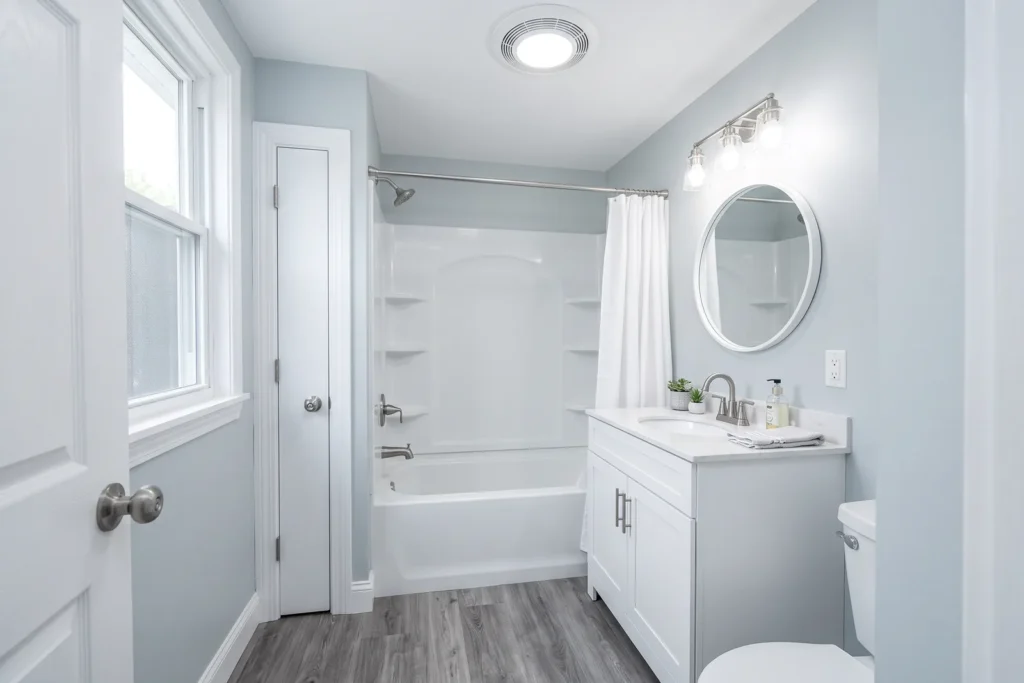
This question comes up constantly. In 2026, with a contractor doing the work, $10,000 generally buys a refresh: a new vanity and top, toilet, faucet and shower trim, a new surround over the existing tub, a new floor, paint, and a fan. It does not buy a gut, custom tile, or moved plumbing. If the bathroom is structurally sound and the layout works, that refresh can look like a new room. If there is water damage or failing plaster behind the surround, the refresh budget gets consumed by repairs, and it is far better to learn that at the walkthrough than after demolition.
How long does a bathroom remodel take?
It depends on the scope more than the square footage. A refresh that keeps the layout, with a new surround, vanity, floor, and paint, is a matter of days. A rebuild to the studs with new tile, a new fan, and moved plumbing is a matter of weeks, with inspections and tile cure time between stages. Your written estimate states a start date and a completion date for your scope, which Connecticut requires on every home improvement contract. The bigger variable is lead time: vanities, tile, and shower glass can take several weeks to arrive, which is why a good contractor has everything on site before demolition starts instead of tearing out a working bathroom and waiting.

Why fall and winter are good seasons for a bathroom in Connecticut
Bathroom work is indoor work, and it does not care about the weather. Two things make September through March a good window here. Exterior season winds down, so contractor schedules open up. And a bathroom finished before the holidays means your guests use the new one instead of the old one. If you want the room done before Thanksgiving, September is the month to book the walkthrough, because anything with a four to six week lead time has to be ordered by the middle of October. The same logic applies to a basement or a kitchen; winter is when interior work gets done in this state.
How to pay for it
Most homeowners pay for a bathroom with some mix of savings, a home equity line, or contractor-arranged financing. Myers Home Improvements works with a financing partner that offers options from $500 to $200,000, with a soft credit check to see your options, and you are never required to use it. We compare every route, including home equity and Connecticut’s own programs, in how to pay for a home remodel in Connecticut, and the details of our program are on the financing page.
Getting a real number for your bathroom
Every figure above is an average of other people’s bathrooms. Yours has its own layout, its own age, and its own surprises, and the only way to price it is to look at it. We give free written estimates after a walkthrough, and the contract that follows includes everything Connecticut law requires. You can see the scope of recent bathroom projects, including what each one involved, in our finished projects. Before committing to a total, the 30% rule is a useful sanity check on how much to put into the house.
When you are ready, get in touch and we will come look at the room. Our bathroom remodeling page covers how we work.
Sources
- 2025 Cost vs. Value Report (Zonda), midrange bathroom remodel, Hartford, CT and national figures.
- Fixr, Bathroom Remodel Cost, updated January 27, 2026. Ranges by scope and room type.
- City of Bristol, Apply or Search for Permits. Permit requirements and fee schedule.
- Connecticut Department of Consumer Protection, Home Improvement Contracts.
Common questions
The 2025 Cost vs. Value Report puts a midrange full remodel of a 5×7 bathroom in the Hartford market at $26,560. Published national ranges run from about $6,000 for a fixture-and-surface refresh to $30,000 and beyond for a full remodel, with layout changes and custom tile pushing higher. Your number depends on the scope and on what is behind the walls.
Less than a primary bathroom, but not proportionally less, because fixtures and the labor to install them cost about the same in a small room as in a large one. Fixr’s 2026 data puts guest bathrooms at $3,500 to $20,000 and half baths at $1,200 to $15,000 depending on scope. A full remodel of a small bathroom is still a full remodel.
If the work touches plumbing, electrical, or mechanical systems, yes, and a full remodel touches all three. Permits come from your town’s building department; Bristol uses an online OpenGov portal. A cosmetic refresh that only swaps a vanity and paint often does not need one, but confirm with your town, and ask your contractor who is pulling the permit.
It depends on the scope. A refresh that keeps the layout is a matter of days; a rebuild to the studs with tile and moved plumbing is a matter of weeks, with inspections between stages. Material lead times come before any of it, and your written estimate states the start and completion dates.
The 2025 Cost vs. Value Report estimates a midrange bathroom remodel in the Hartford market recoups about 59.8% of its cost at resale. The rest of the value is in using the room every day. If you are staying in the house, that matters more than the percentage.
Scope. Two estimates for the same room can differ by half because one includes new drywall, a new fan, and a tile floor and the other does not. Compare line items rather than totals, and make sure both contractors saw the same room and are quoting the same work.
Usually the wet area, especially a tiled shower with waterproofing, a custom pan, and glass, followed by anything that moves plumbing. Vanities and fixtures are where finish-level choices add up fastest.