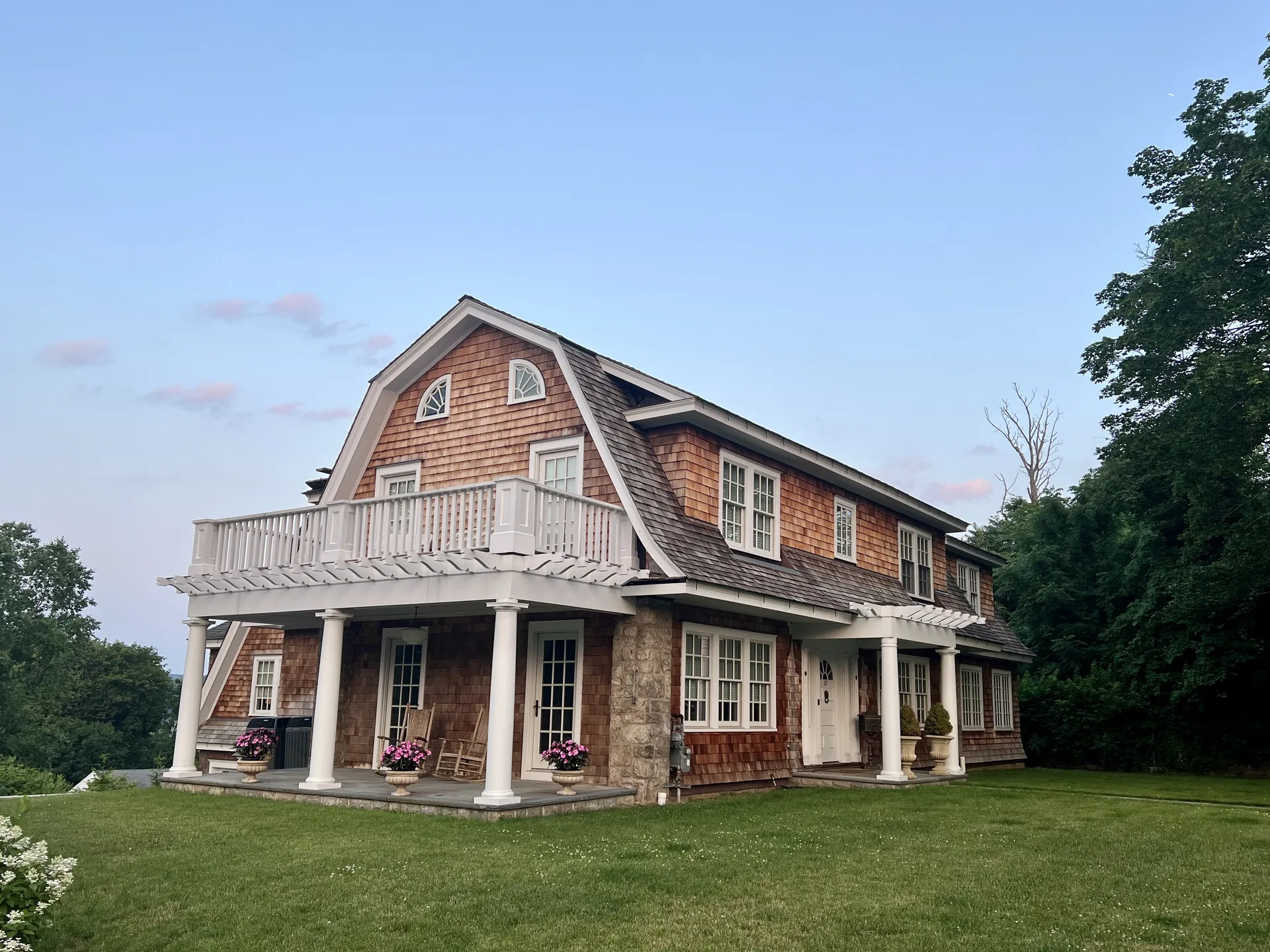
The 30% rule says you should not put more than 30% of your home’s current market value into renovating it. On a house worth $350,000, that puts the ceiling around $105,000 across everything you do, not per project.
It is a rule of thumb that circulates on real-estate sites, not something any lender, appraiser body, or Connecticut agency publishes. It is a rough guideline about resale exposure. It is not a law, it is not a lending rule, and it is not a budget. Knowing what it is actually protecting you from makes it far more useful, and makes it obvious when to ignore it.
The arithmetic
Multiply your home’s current value by 0.3. That is the whole calculation.
| If the house is worth | The 30% figure is |
|---|---|
| $250,000 | $75,000 |
| $300,000 | $90,000 |
| $350,000 | $105,000 |
| $400,000 | $120,000 |
| $500,000 | $150,000 |
Two details people miss. The figure is meant to cover everything, so labor, materials, permits, and the money you hold back for surprises all sit inside it. And it uses what the house is worth now, not what you paid for it, which for anyone who bought in Central Connecticut more than a few years ago are very different numbers.
Worth checking your own number rather than assuming. Public estimates of the same town’s median sale price can differ by tens of thousands depending on which site you look at, so it is worth comparing a couple of sources or asking a local agent before you build a plan on top of one figure.
What the rule is actually protecting you from
One thing: overcapitalization. That is putting more into a house than the surrounding market will ever give back.
The ceiling on what your house can be worth is set mostly by what comparable houses nearby sell for, not by what you spent. You can build the best kitchen on the street, and the street still has a good deal of say in the appraisal. The 30% figure is a blunt way of keeping your total spend inside the range where the neighborhood can still support it.
Which tells you immediately when the rule matters most. It matters if you are planning to sell soon. It matters much less if you are staying put.
Four places it breaks down
It ignores why you are doing the work. A rule about resale has nothing useful to say about a bathroom that has to work for someone with limited mobility, or a ceiling that came down after a leak. Necessary work is not an investment decision, and running it through a resale formula gives you an answer to a question you were not asking.
It treats every dollar as the same dollar. Thirty percent spent on a kitchen and thirty percent spent on finishing a basement do not behave the same way at resale, and neither behaves like thirty percent spent on repairs a buyer will never see. The rule caps the total and says nothing about where the money goes, which is the part that actually decides what you get back.
It assumes the number holds still. Home values move, and the 30% figure moves with them. A budget built on last year’s value is working from a number that has already changed.
It does not know how old your house is. This is the one that matters most around here. A lot of Central Connecticut housing stock is old, and older houses have a habit of adding scope once they are open. Knob and tube behind a wall, plaster that will not take a patch, a subfloor that has to come up before anything new goes down. None of that is overspending. It is work that has to happen before the work you actually wanted can happen, and a resale formula has no way to account for it.
How to use it without letting it decide for you
Treat it as a sanity check at the start, not a budget you work backward from.
If you price out a wish list and it lands near 45% of what the house is worth, and you expect to sell in three years, that is genuinely worth a conversation before anyone orders materials. If it lands at 40% and you have been in the house eleven years with no plans to leave, the number is telling you much less than it appears to. You are buying the use of the space for a long time, and resale is one factor among several rather than the whole test.
The rule is also a reasonable brake on scope creep. Projects grow. Deciding early roughly where the total stops gives you something to measure the growth against.
A better question to ask first
Before you calculate 30% of anything, it is usually more productive to work out two other things: what this specific scope actually costs in this specific house, and what the house needs before the work you want is even possible.
Those answers come from someone walking the house, not from a formula. The scope of a bathroom that keeps its layout and the scope of a bathroom taken back to the studs are different projects with different numbers, and no percentage of your home’s value will tell you which one you are looking at. For the published figures by scope, see how much a bathroom remodel costs in Connecticut. You can see both kinds in our finished projects, where each one lists what the job actually included and the town it was in.
Once you know the real scope, the 30% rule becomes what it should have been all along: one number you glance at, rather than the one making the decision.
If you want a real number for your house
We work across Central Connecticut and Litchfield County out of Bristol, on kitchens, bathrooms, basements, and on flooring, paint, and ceiling work. Estimates are written, and they follow a walkthrough rather than a phone call.
Get in touch and we will come look at the space.
Common questions
It is a budgeting guideline: keep total renovation spending at or below 30% of your home’s current market value. On a house worth $350,000 that is roughly $105,000 across everything, not per project. It is a rule of thumb about resale exposure, not a law or a lending requirement.
Yes. The figure is meant to cover the whole cost of the work: labor, materials, permits, and the money you hold back for the unexpected. It also uses what the house is worth now, not what you paid for it.
It matters much less. The rule exists to stop you putting more into a house than the surrounding market will return, which is a selling problem. If you are staying put for years, you are buying the use of the space, and resale becomes one factor rather than the deciding one.
That work sits outside what the rule is really talking about. Older Connecticut houses often need something addressed once they are open: a subfloor that has to come up, plaster that will not take a patch, wiring that needs attention. That is not overspending, it is the cost of doing the job properly, and a resale formula has no way to account for it.