Choosing the right vanity can make or break your bathroom remodeling project. At Myers Home Improvements, we help homeowners across central Connecticut pick the right vanity for their space. The decision isn’t just about looks. It affects your daily routine, storage needs, and even your home’s value. Getting it wrong means living with frustration every morning when you’re trying to get ready.
We see families struggle with this choice all the time. They love a beautiful double vanity in the showroom, but it overwhelms their small bathroom. Or they pick a tiny single vanity that leaves them with nowhere to store their toiletries. The key is understanding what each type offers and matching it to your real-life needs. Let’s walk through the main vanity types so you can make the best choice for your home.
Understanding Single Vanities: Perfect for Smaller Spaces
Single vanities suit bathrooms with less than about 60 inches of clear wall, which is what actually governs the choice. They typically measure 24 to 48 inches wide, giving you enough counter space for daily essentials. Most single vanities include one sink, a mirror, and storage underneath in the form of drawers or cabinets. This setup works perfectly for guest bathrooms, powder rooms, or master bathrooms where only one person gets ready at a time.
The biggest advantage of a single vanity is space efficiency. You’ll have more room to move around in your bathroom, which makes the space feel larger and more comfortable. Single vanities also cost less than double vanities, both for the unit itself and installation. This makes them a smart choice when you’re working with a tight bathroom remodeling budget. We often recommend single vanities for first-time buyers or anyone who wants to keep renovation costs reasonable.
Storage in single vanities has improved dramatically over the years. Modern designs include deep drawers with dividers, pull-out organizers, and even built-in electrical outlets for hair tools. You can easily store towels, toiletries, and cleaning supplies without cluttering your counter. The key is choosing a vanity with the right mix of drawers and cabinets for your specific needs.
However, single vanities do have limitations. If two people need to use the bathroom at the same time, you’ll run into conflicts. Morning routines take longer when you can’t both brush teeth or wash faces simultaneously. Single vanities also provide less counter space, which can feel cramped if you use lots of products or like to keep things spread out.
Double Vanities: When Two Sinks Make Sense
Double vanities shine in master bathrooms where couples share the space daily. They typically measure 60 to 84 inches wide and include two sinks with separate faucets. This setup eliminates morning traffic jams and gives each person their own dedicated space. We recommend double vanities where there is at least 60 inches of clear wall and two people regularly get ready together.
Each person gets their own sink, mirror area, and storage space. You can organize your side exactly how you want it without affecting your partner’s setup. This arrangement works especially well for couples with different schedules or grooming routines. One person can be washing their face while the other brushes teeth, making mornings much more efficient.
Storage capacity roughly doubles with a double vanity. You’ll have separate areas for each person’s items plus shared storage in the middle. Many double vanities include a combination of drawers and cabinets, giving you options for different types of storage. We often install double vanities with electrical outlets on each side, so both people can use hair tools simultaneously without fighting over power.
The main drawback is space requirements. Double vanities need significant wall space and floor area to look proportional. In smaller bathrooms, they can make the room feel cramped and overwhelming. They also cost more than single vanities, sometimes twice as much when you factor in double the plumbing, faucets, and installation work. You’ll need at least 60 inches of wall space to make a double vanity work properly.
Floating vs Traditional Vanities: Style and Function Differences
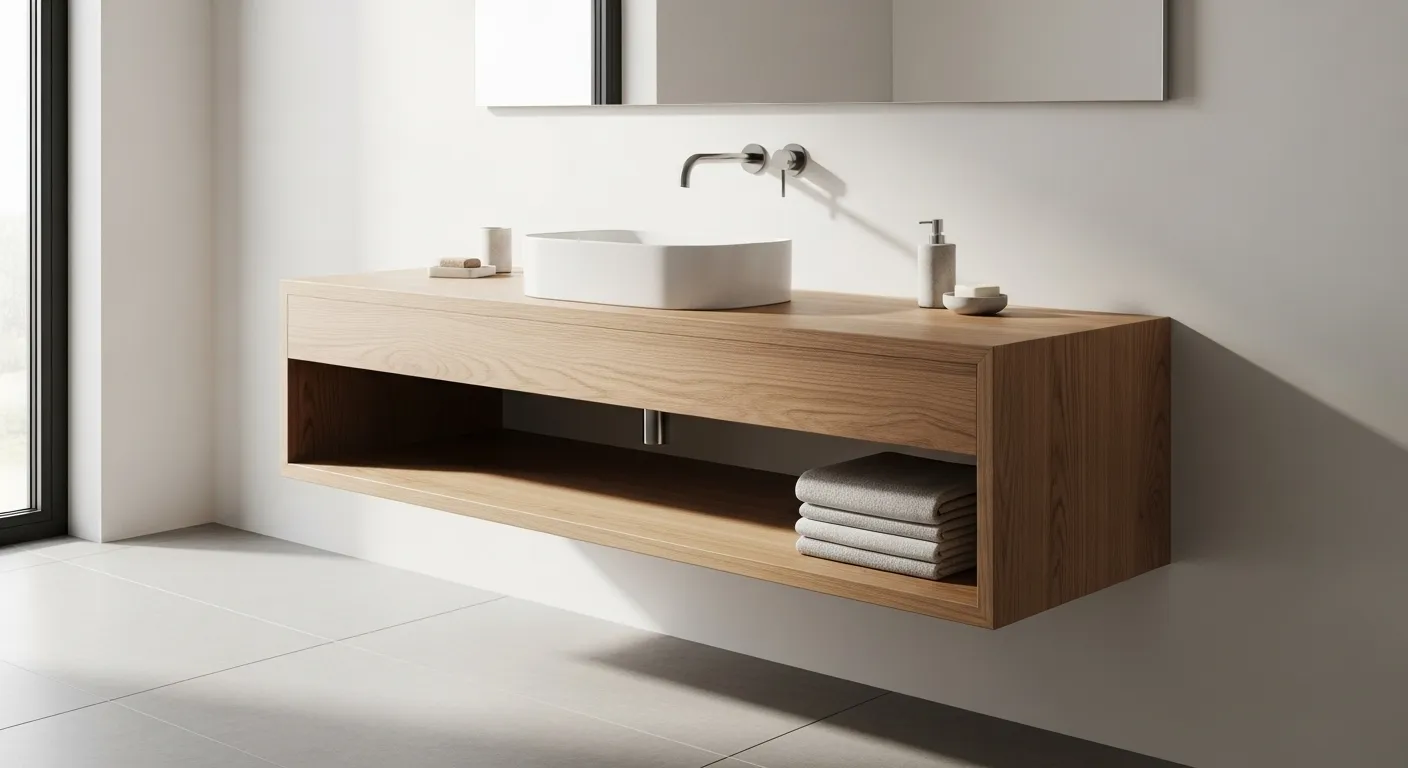
Floating vanities mount directly to the wall without touching the floor. This creates a modern, clean look that makes bathrooms feel more spacious. The open space underneath makes cleaning easier and gives the illusion of more floor area. Traditional vanities sit on the floor with a toe kick at the bottom, providing a more classic, furniture-like appearance.
When you’re deciding how to choose the right vanity style, consider your bathroom’s overall design. Floating vanities work beautifully in contemporary bathrooms with clean lines and minimal decoration. They’re perfect for small spaces because the visible floor underneath makes the room feel larger. We often recommend floating vanities for bathroom remodeling projects where homeowners want a fresh, updated look.
Traditional floor-mounted vanities offer more storage space because they extend all the way to the floor. This extra space works well for larger families or people with lots of bathroom items to store. Traditional vanities also tend to cost less than floating ones because the installation is simpler. You don’t need special wall reinforcement or complex mounting hardware.
Installation requirements differ significantly between these two styles. Floating vanities need strong wall support, especially for heavier materials like granite or quartz tops. We always check wall framing and add reinforcement when necessary. Traditional vanities are easier to install but can be harder to clean around. Consider your cleaning preferences and physical abilities when making this choice.
Material Choices: Finding Vanities That Last
Vanity materials affect both appearance and durability in your bathroom remodeling project. Solid wood vanities offer timeless beauty but need proper sealing to handle bathroom moisture. Engineered wood products like MDF resist moisture better but may not last as long. Laminate vanities cost less but can show wear more quickly in high-use bathrooms.
We see the best long-term results with properly sealed wood or high-quality engineered materials. Solid wood vanities can last decades when maintained correctly, making them a good investment for forever homes. However, they require regular care to prevent water damage and warping. Engineered materials offer good durability with less maintenance, making them practical for busy families.
Countertop materials also impact your vanity’s function and appearance. Granite and quartz tops resist stains and scratches but cost more upfront. Laminate tops save money but may need replacement sooner. Cultured marble offers a middle ground with good durability at moderate cost. Consider how hard you’ll use the vanity and your long-term plans for the bathroom.
Finish quality makes a huge difference in how your vanity looks and performs over time. Cheap finishes chip, peel, and discolor quickly in bathroom conditions. We always recommend investing in quality finishes that can handle daily use and humidity. This might cost more initially but saves money and frustration in the long run.
Measuring Your Space: Getting the Size Right
Proper measurements are crucial when learning how to choose the right vanity for your bathroom remodeling project. Start by measuring your wall space, but don’t forget about door swings, toilet placement, and walking areas. A vanity that fits the wall might still block important traffic patterns or make the room feel cramped.
We always recommend leaving at least 30 inches of clear space in front of your vanity for comfortable use. This gives you room to open drawers and doors without hitting other fixtures. If your bathroom has a door that swings in, make sure the vanity won’t interfere with opening it fully. Consider how the vanity will affect the overall flow of your bathroom space.
Height considerations often get overlooked but significantly impact daily comfort. Standard vanities measure 32 inches high, but many people find 36-inch heights more comfortable. Taller family members especially benefit from higher vanities that reduce back strain. However, remember that children and shorter adults might need a step stool with taller vanities.
Don’t forget about plumbing locations when sizing your vanity. Moving plumbing adds significant cost to bathroom remodeling projects. We always check existing plumbing locations and try to work with them when possible. If you need to move plumbing, factor that cost into your overall vanity budget.
Making Your Final Decision: Practical Next Steps
Start your vanity selection by honestly assessing your family’s needs and bathroom habits. Count how many people use the bathroom regularly and when they typically get ready. Consider your storage needs, style preferences, and budget constraints. This information helps narrow down your options to vanities that will actually work for your lifestyle.
Visit showrooms to see vanities in person before making final decisions. Photos can be misleading, and you need to feel the quality of materials and finishes. Bring your bathroom measurements and photos to help design professionals suggest appropriate options. Don’t rush this decision. A good vanity should serve your family for many years.
When you’re ready to move forward with your bathroom remodeling project, work with experienced professionals who understand local building codes and installation requirements. Proper installation ensures your vanity functions correctly and lasts as long as possible. We always recommend professional installation, especially for floating vanities or complex plumbing changes.
At Myers Home Improvements, we’re here to help you choose the right vanity for your specific situation. Every bathroom is different, and what works for your neighbor might not work for you. Take time to consider all the factors we’ve discussed, and don’t hesitate to ask questions.